
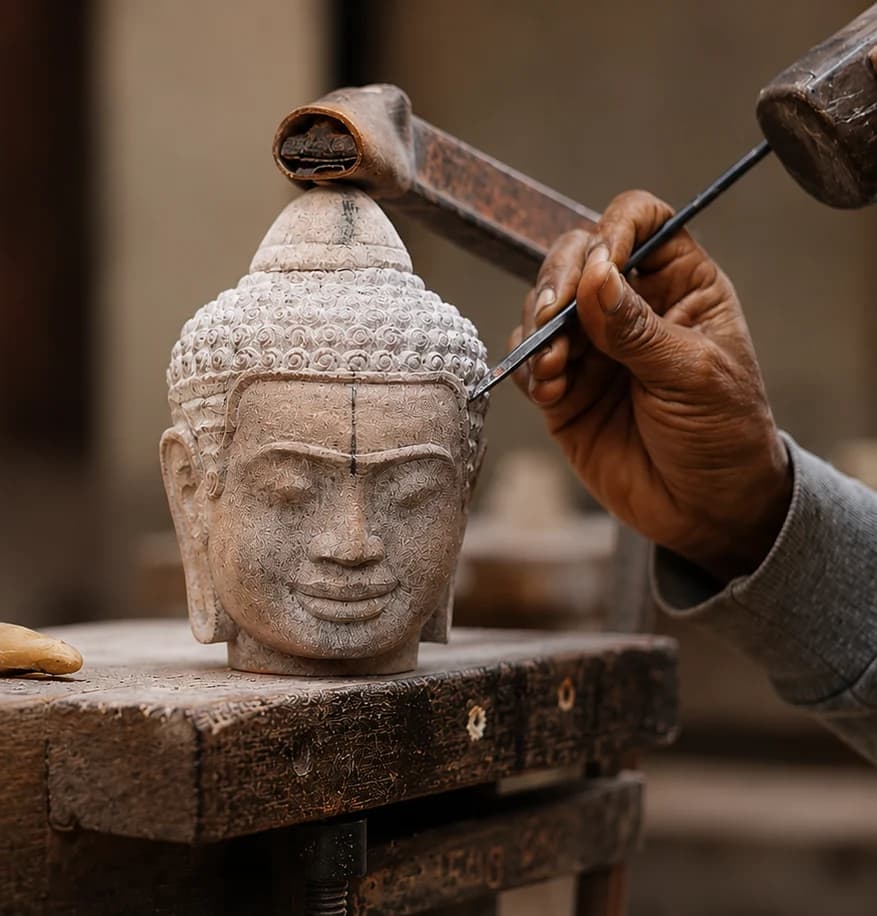
The workshopthat never closed
Angkor was not a monument.
It was a deadline.
Twelfth-century Angkor mobilised stone masons, potters, weavers and rattan makers at the same time. It was not a ruin — it was a single vast workshop that ran for two hundred years. The construction ended. The hands never stopped.
What people call ruins were once a supply chain. Kilns in Kampong Chhnang, looms in Takeo, rattan in Kampong Cham — all of it fed the same building site. The site closed. The villages did not.
The twentieth-century ruptures almost erased the line but did not break it. Most of today's workshops were re-opened in the 1980s by returning master artisans; the average age is high, the techniques are complete, and what is missing is access to markets and pricing power. That is where ARUNERA sits.
- ១
Kampong Chhnang
Cambodia's pottery capital. Low-temperature wood firing, hand-thrown and hand-paddled forms, deep-toned clay, matte granular surface after firing.
- ២
Takeo
The core province of Hol ikat. The weft is resist-dyed before the loom; the pattern reveals itself row by row as the cloth is woven.
- ៣
Kampong Cham
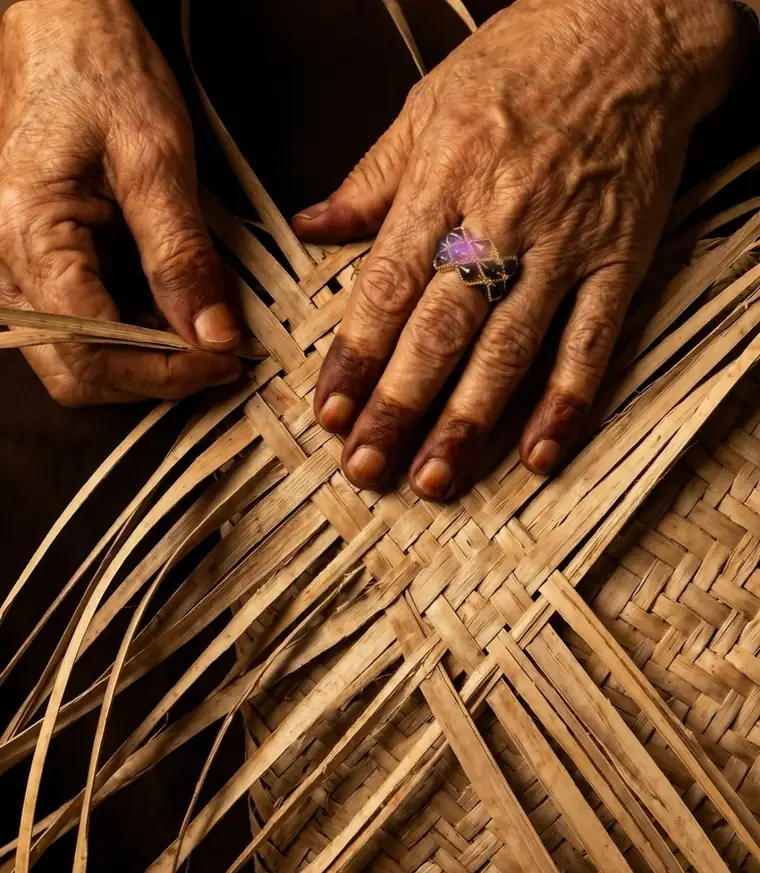
Rattan and bamboo from the Mekong banks. The diagonal start and the hexagonal weave make the structure itself the decoration.
- ៤
Siem Reap
Sandstone carving and raw lacquer, worked by a generation trained directly through the Angkor restoration programmes.